I was reading some of the writing group’s work earlier and there’s one writer in the group with a particular talent for creating imaginative aliens. It got me thinking about alien designs and how much variety there is out there. This post is mostly just an excuse to nerd out over some of my favorite aliens, but maybe I can pick up on some ideas to invent some more creative aliens myself.
On TV and in movies, lots of aliens are just humans with some special additions. Probably because it’s really expensive to make a more labor intensive alien suit, or use a lot of makeup. There’s still a lot to be said for the design of humanoid aliens though. A lot of creative thought goes into their design, and their biology, even if you never actually see it. One of my all-time favorites are the Klingons from Star Trek.

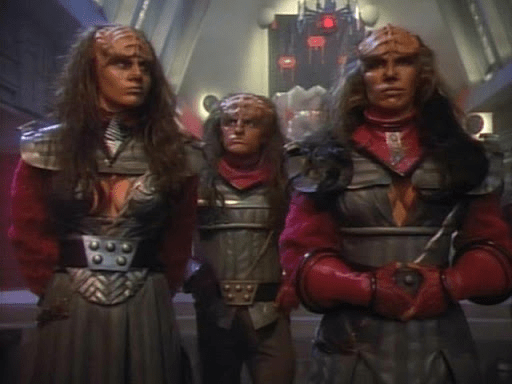
The Klingons hit their peak in TNG in my opinion. The makeup is so seamless that it feels like I’m looking at an actual alien here. Depending on the actor it might look a little bit hokey at times …

Still love Gowron, but how much more serious do you take this guy in comparison?

The armor can really sell it too, but somehow I suspect the boob window on those demented Klingon sisters had Roddenberry rolling in his grave a little.
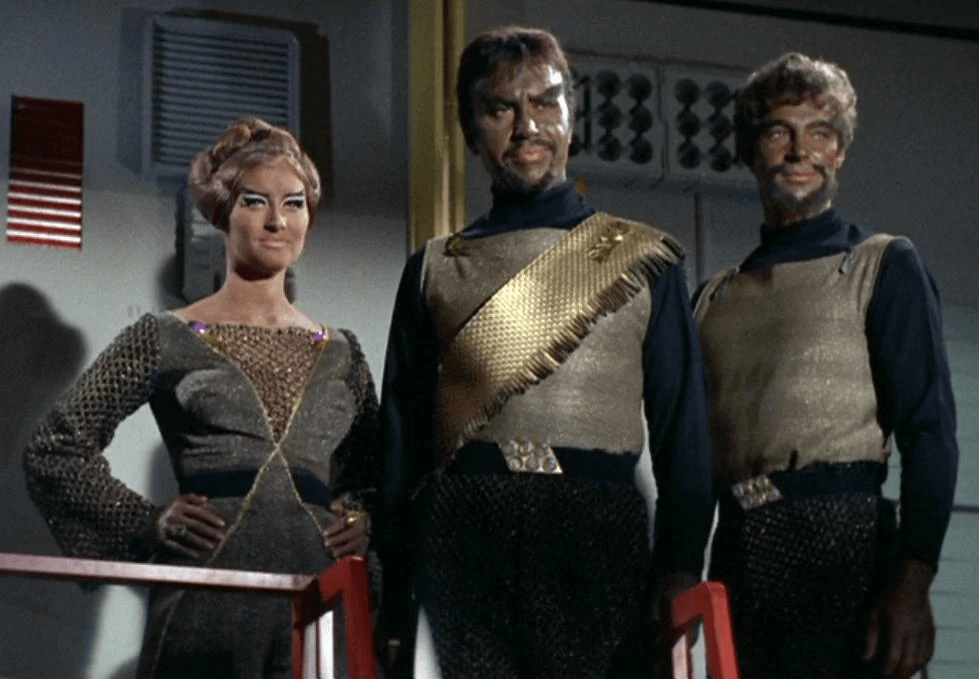
The earliest iterations of Klingon had minimal makeup. They looked like people basically, like the Betazoids from later Star Trek series.
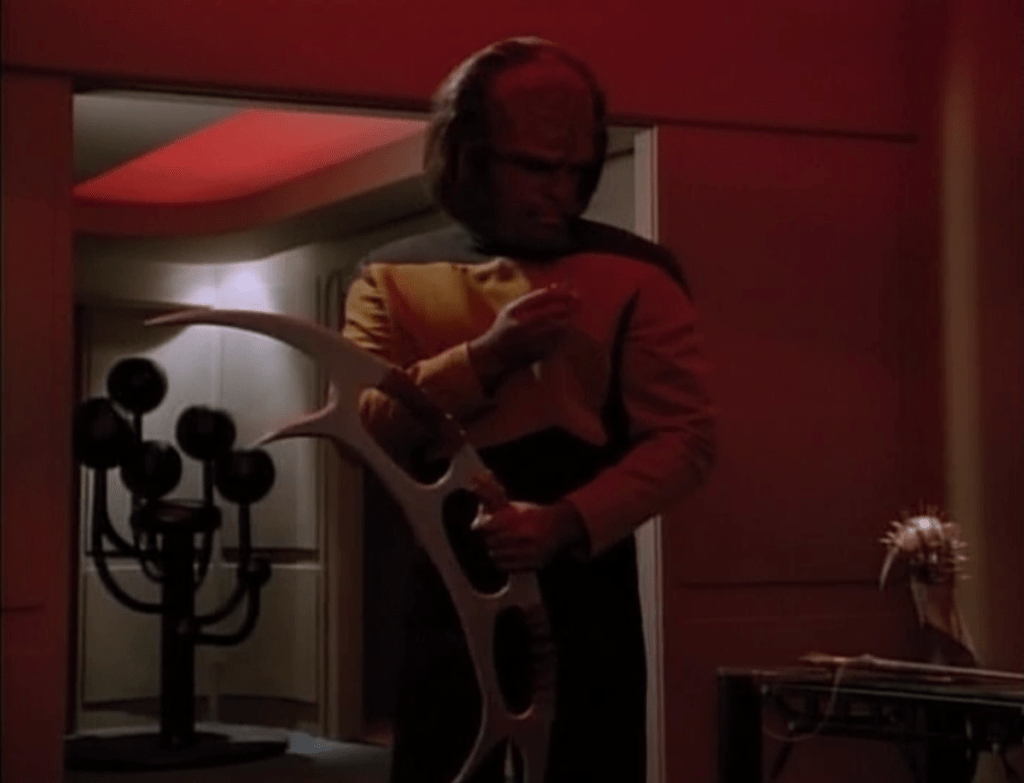
What they lack in creative design (or rather, funding for creative design) they more than make up for by having a rich background. Their warrior culture produced some of the most recognizable symbols in pop culture, including the best sword ever.
The series teaches a lot about Klingons as it goes on. Their bodies have tons of redundant organs, just as a cool fun fact, and Worf commonly engages in Klingon rituals that give insight into their lives. Several times over the series we get to see humans attempt to enjoy Klingon fine dining.
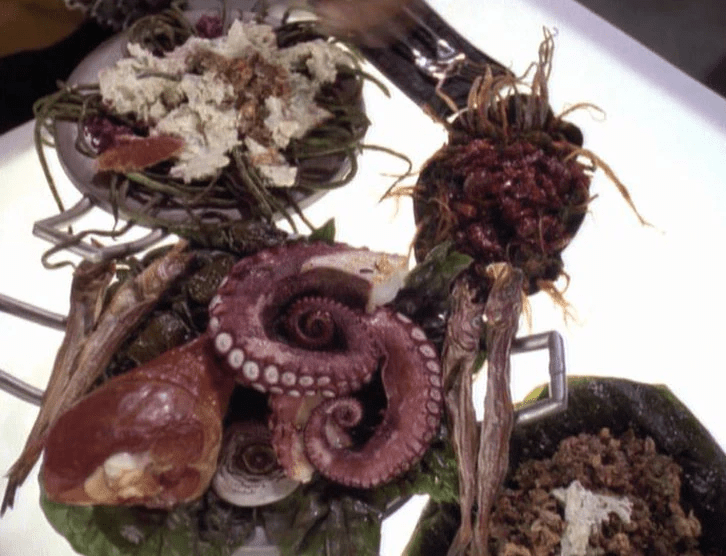
Ugh.
I’m not going to talk about the blingons, but I think the most recent iteration of Klingon looks pretty cool. This guy’s forehead is epic, and the sharp, yellowed teeth enhance that traditional Klingon snarl.
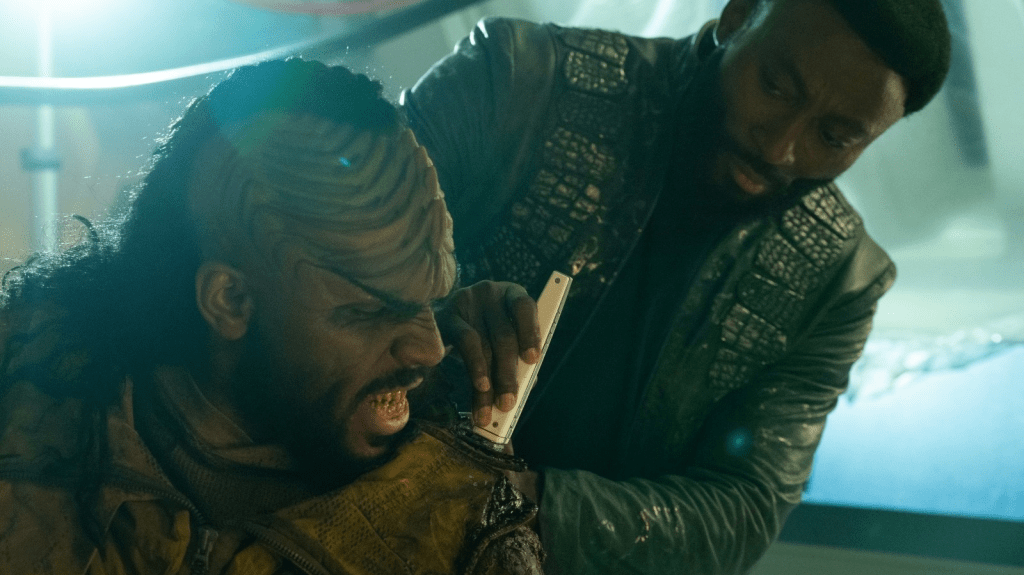
Star Trek has lots of aliens that just amount humans with some makeup on, but like the Klingons, they make up for it by having rich cultures each and every one. It’s proof that you can make cool aliens even if your budget looks like this:

On the opposite end of the spectrum we have another of my favorite aliens, Xenomorphs. Their biology, origins, and ‘culture,’ if you can call it that, are all largely a mystery, but their terrifying presence and H.R. Giger’s unique design are what make them so iconic.

I find the artworks that inspired the Xenomorph to be particularly disturbing.
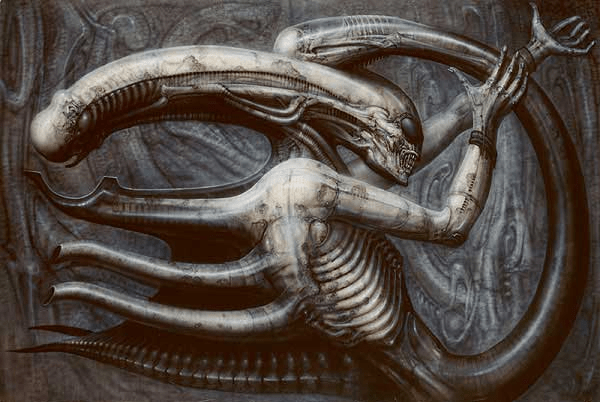
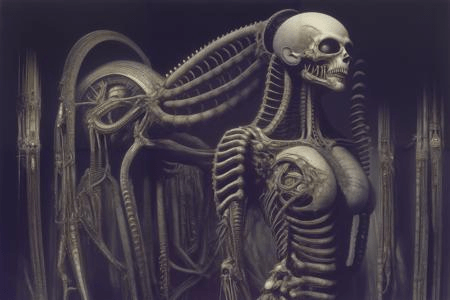
These pieces and many more were created without the need for a story to encapsulate them. These aren’t so much aliens as they are nightmares, a horrific fusion of the biological and the mechanical that preys on something primal. Just looking at them feels … wrong. These images don’t need a deep background or anything else to get the point across. You don’t have to know what those things eat or how they communicate to know that they’re a very particular kind of evil.
Most other alien designs fall somewhere in the middle, and I think the best aliens are the ones where creative design meets rich background. The more alien the better in my opinion, but I want my cake and to eat it too. Even if they’re some unholy looking abomination, I want to know if they have friends, family, society, cultural norms, language, everything.
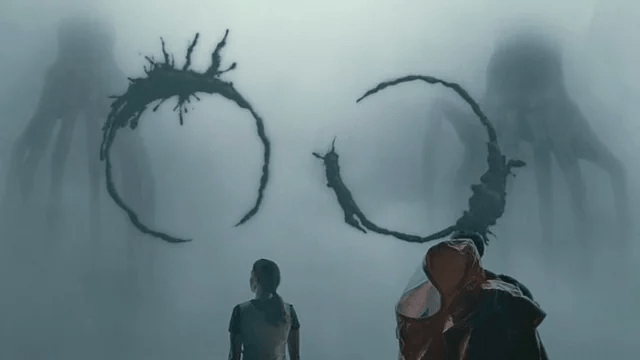
The design of the Heptopods in ‘Arrival’ really hits the mark on all fronts there. These aliens are, well, extremely alien. They have seven legs with little pronged forelimbs that extrude this inky substance that they speak through in the circles that you see in the image. Each circle is like a sentence, and you have to read them forward and backward at the same time to get the whole meaning. The language transcends the boundaries of time, and allows them to peer into the past and the future. Throughout the story their language is conveyed to both the viewer and the characters bit by bit as their reason for being on Earth is slowly revealed. What’s even crazier is when their true purpose is finally made clear, you also get to find out you’ve just been staring at their toes this whole time. They really look like this:
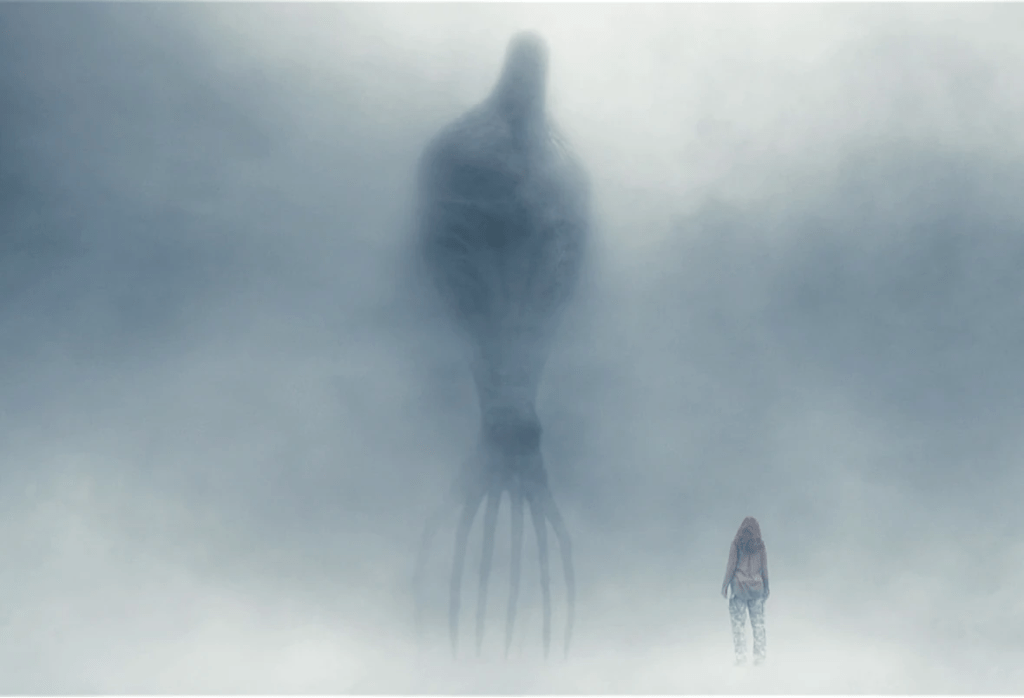
It’s at once hauntingly human and undeniably alien. There’s just enough in view to recognize what it is, but not enough to spell out how they function, or what they are. Their language gives insight into their culture, while their design obscures it. They might be terrifying if they revealed themselves immediately, but after getting to learn so much about them over the course of the movie, instead they’re more awe-inspiring than anything. The Heptopods are the Goldilocks of aliens in my opinion. Not too alien, not too human, but just right.
So far I’ve only mentioned on-screen aliens. Mostly because it’s easier to capture their essence in an image than to spell out exactly what they look like. In the pages of a book however, aliens can transcend the visual, and become something more. Many authors have relied on the non-visual nature of text to convey the existence of aliens that either have no physical form, or do exist physically, but in a form that is incomprehensible to the human psyche. Lovecraft’s Cthulhu comes to mind, a creature whose only visual description in the original works is this:
The Thing cannot be described – there is no language for such abysms of shrieking and immemorial lunacy, such eldritch contradictions of all matter, force, and cosmic order. A mountain walked or stumbled.
Recently I read a book called ‘Blood Music’ by Greg Bear that took full advantage of this concept of an alien without form. The ‘aliens’ in ‘Blood Music’ are genetically modified intelligent microbes called Noocytes, organisms that measure space by tasting the concentration of chemicals, talk to one another via RNA sequences, and exist within a world totally unlike our own. Nevertheless, they have a unique character to them, like little explorers trying to grasp the world they live in. They revere their creator, and the oldest types of cells, and have other hints of culture not unlike our own. They work toward a new future for life itself in the hopes of bringing humanity along with them.
Ultimately, I think the aliens that work are the ones that ones that get us thinking. Whether they’re just like us, or an incomprehensible monster, as long as they have that special kind of intrigue that keeps people coming back, it’s a successful alien. No matter how they do it they need to bring a sense of wonder along with them; wonder about the various kinds of life that might exist somewhere beyond our reach, out there in the dark.
Thank you for reading,
Benjamin Hawley
 Dangerous Day Job