I hinted the other day that this topic might be a little much to wrap my head around, but I didn’t expect it to be as hard as it was. Megastructures and interstellar travel, which I covered in the past, are a couple of sci-fi tropes that are ultimately limited to a few different methods and presentations. Big thing houses people, spaceship carries people elsewhere. There’s only so many ways to achieve those results without breaking immersion, and it’s pretty clear how and when the tropes arose in popular media. Iron Man armor on the other hand is weirdly diverse, sketchily defined, and worst of all, it’s a little unclear where it came from. Diving into this topic has proved to be a bit of a confusing minefield. I’ll do my best, but I honestly can’t tell if anything I learned will lead me to correct conclusions here. At least there will be some cool pictures.
First of all, what is it exactly? That’s the first hurdle I came across. Who can say what actually counts as powered armor? Does it have to cover your whole body? Does it have to be mechanical in nature, or can magic suffice? What if it just grants enhanced physical abilities without actually protecting you from anything? Does it still count? In other words, how is ‘power armor’ actually defined? After reading far too many definitions, I settled on this one that I think sums up the characteristics pretty well:
“Armor built around an exoskeleton that includes some mechanical system that acts as artificial muscle.”
I think by this definition the armor has to meet the following conditions to really count as power armor.
- It has to protect, not just help lift.
- It has to help lift, not just protect.
- No magic, that’s just too broad.
- Exosuit implies something human sized, so I don’t think giant mechs count either.
Sorry Hephaestus, but I don’t think anything you built counts. I found out Norse mythology has a bunch of magic armor too, but I can’t count any of that either. I’m still going to cover exosuits since they overlap so heavily with power armor, but I don’t think they quite make the cut. Giant robots are cool, and actually predate the first powered armor I could find, but I don’t think they count either since they aren’t really meant to protect the body. They definitely deserve an honorable mention though, so here’s the earliest example I could find, ‘The Steam Man of the Prairies,’ by Edward S. Ellis.

Interestingly enough, I found one source saying this was the first science fiction dime novel to boot. Looks like Ellis got a two for one. Also worth mentioning is a similar concept by the famous Jules Verne, ‘The Steam House.’
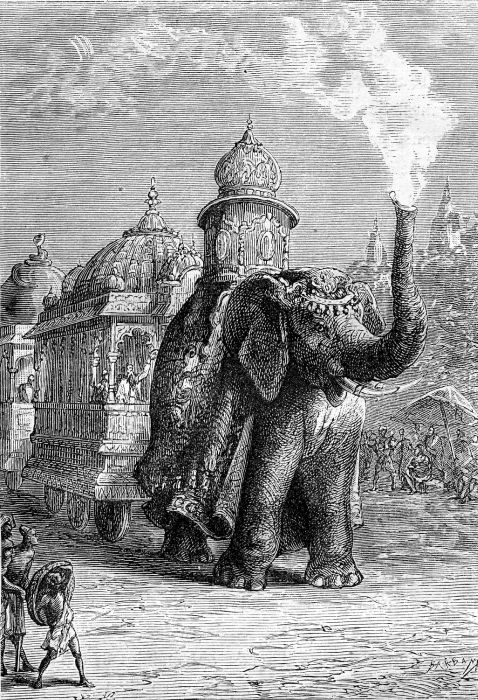
As far as I can tell it’s pretty much the same idea, but instead of a man it’s a giant mechanical elephant. Steam powered, naturally.
But what about the real deal, armor, not a piloted machine? I found some articles crediting Robert Heinlein’s ‘Starship Troopers’ as the earliest version in 1959, and it was certainly the first version I’d ever heard of, but there are other, less famous stories that include military exosuits predating old Heinlein by a few years.
There was something called the ‘Lensman’ series by E. E. Smith that included powered armor, but from the descriptions I’ve read, it seems a little shaky to me. The armor was intended for space travel, and may actually have a better spot in my interstellar travel post because it featured something called the ‘inertialess drive,’ allowing the main character to travel through space very fast in order to police the entire galaxy. The main character was also a result of a eugenic breeding program, and was granted psychic powers by a group of ruling class aliens via the titular ‘Lens.’
The very earliest armor I could find was something called ‘The Affair of the Brains’ wherein evil scientist Su Kui has not only built super suits, but also wants to take a scientist’s brain from their body to include in their council of super intelligent brains. Maybe somebody else did it sooner, I’m surprised I couldn’t find anything steam powered to be honest. It would seem like an obvious first step but I guess we hit the ground running with this one.
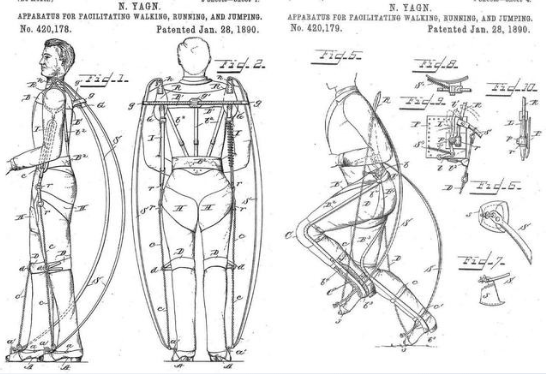
Another honorable mention for first exosuit goes to a Russian man, Nicholas Yagin, who made the first known exosuit in the 1890s. It was apparently powered by filled bags of gas, and was designed to help paraplegics.
As far as true power armor goes though, Heinlein has to be the first widely popular instance. I find it a little weird that they didn’t feature it as heavily in the movie though.

This doesn’t look like power armor to me, but it was definitely power armor in the books, so I’m not sure what the disconnect was. Maybe it just wasn’t within budget for the film.
Next up is the one that started this whole discussion, Iron Man himself. First appearing in the anthology comic series Tales of Suspense #39 in 1963, he’s done well for himself since.
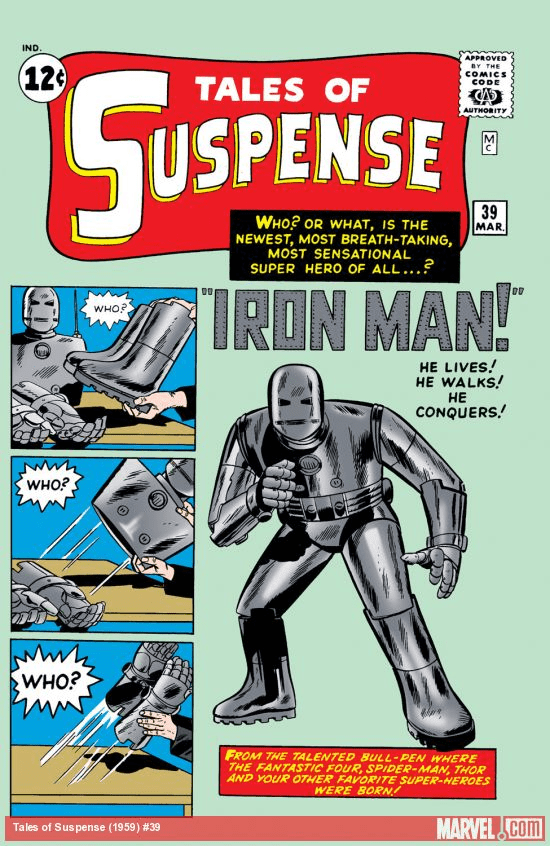
Fun fact, Iron Man was actually a B-list character before the movies turned him into an A-lister. The Avengers were less popular than the X-Men, the Fantastic Four, and all the other big IP that Marvel sold off in the 90s. He might be a household name now, but back then, he didn’t get as much attention as the Hulk or Captain America. Tony Stark was even less popular as a character. RDJ really turned him around from pure narcissist to funny, loveable asshole. The more you know.
From Iron Man forward, the power armor trope just explodes in popularity. It shows up in basically every future war novel that includes ground troops after ‘Starship Troopers.’ The US and other militaries started researching real life exosuits for use in non-combat and combat situations, though most of these don’t count since they don’t have any armor. The first of which, the Hardiman by General Electric, looks suspiciously similar to a certain alien-busting forklift.


Again, not quite power armor as I defined it earlier, but if it can take on a xenomorph it may as well be ready for combat. The Hardiman, however, was not. It functioned by taking user input from an inner layer close to the body which was then translated to the outer layer through a system of hydraulics, granting immense strength to the wearer. Unfortunately, the long lag time between an input and seeing the input reflected in the outer suit hydraulics made for ‘violent, uncontrolled motion.’ The engineers had the good sense to never put a person in it. Unlike some people …
Have to give credit for the most messed up true power armor to the tabletop game ‘Warhammer 40,000’ back in 1987. They have some really bulky armor that’s actually surgically grafted to the marines that then live in the suits. Ugh.

Now we’re getting to more modern stuff. There are so many of these since the 80s it’s hard to keep track. There was more prevailing interest in cybernetics for a while, eschewing the suits for integrated technology instead, a la Robocop, but I’m sure there were still dozens of power armors between then and now.
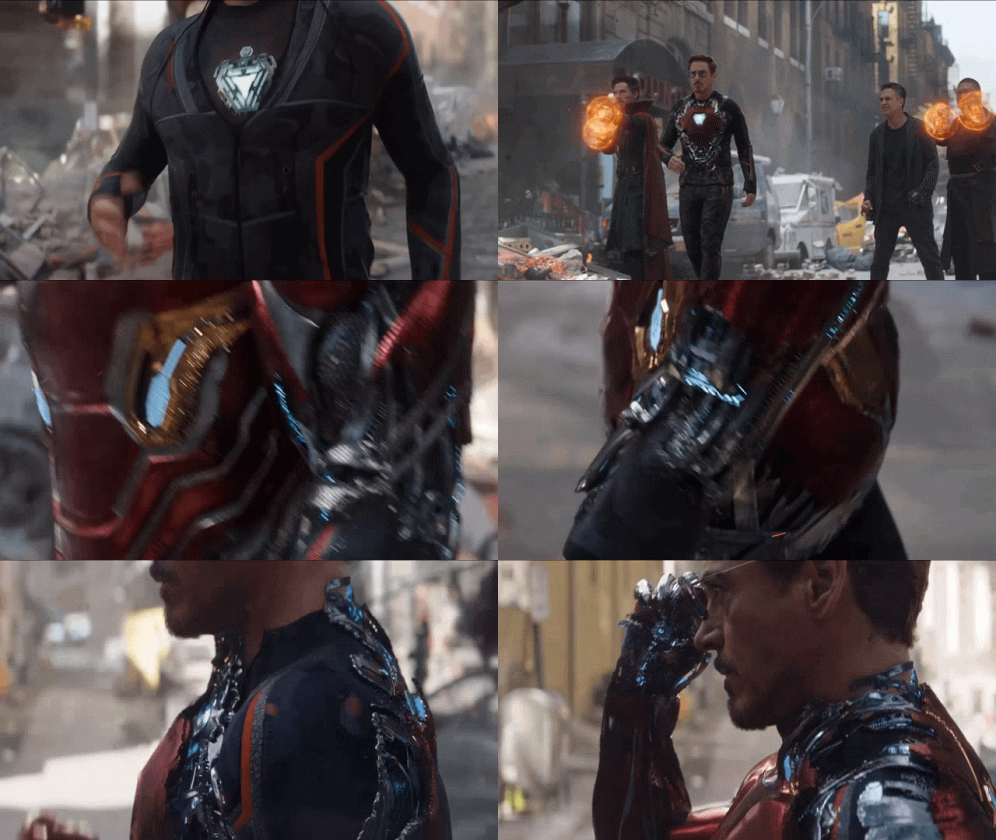
CGI has given way to some extremely vivid depictions of power armor in recent years. Of course we have Iron Man’s latest iteration. Now he’s got nanomachines that can make anything he dreams up. Does this even count anymore? I mean it’s pretty much magic right?
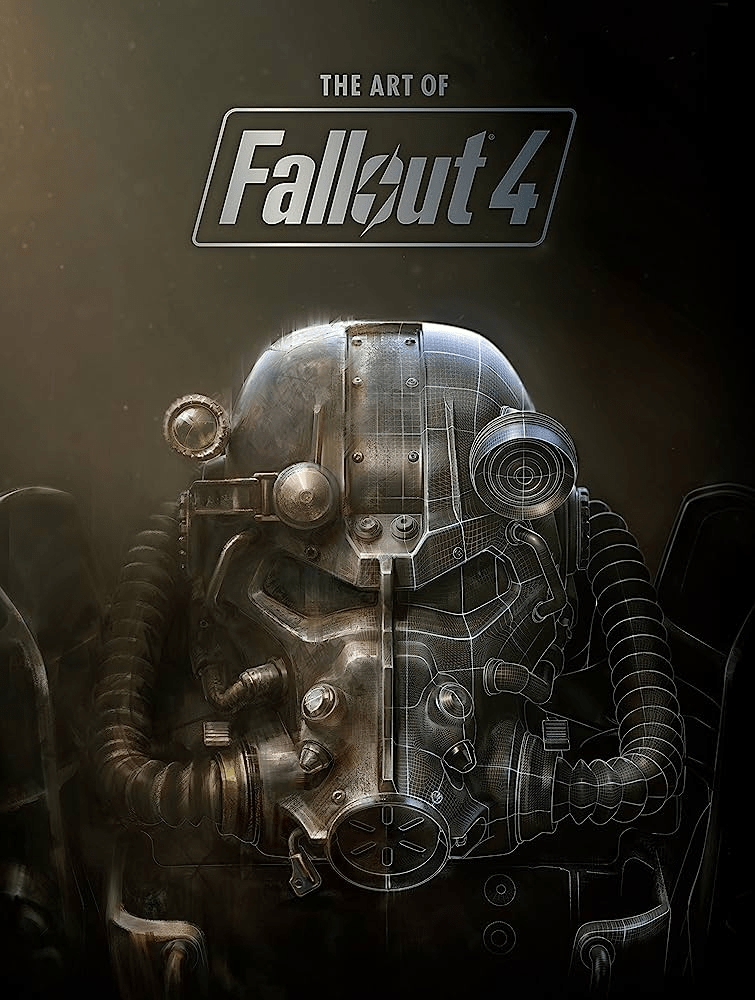
It has become incredibly popular in video games too. The ‘Fallout’ series has the most recognizable version, seeing as its right there on the cover. I find these interesting because they’re powered by miniaturized nuclear reactors.
My personal favorite though is the CryNet Nanosuit from the ‘Crysis’ series of video games. This one takes on a more muscular, textile based approach that looks the most futuristic in my opinion.

Who needs a metal shell when the source of power in the power armor is strong enough to stop bullets in the first place? Not only do you get to be super strong, super fast, and bullet proof, but you also get to look like you’re incredibly jacked while you’re at it. And turn invisible?! Too cool.
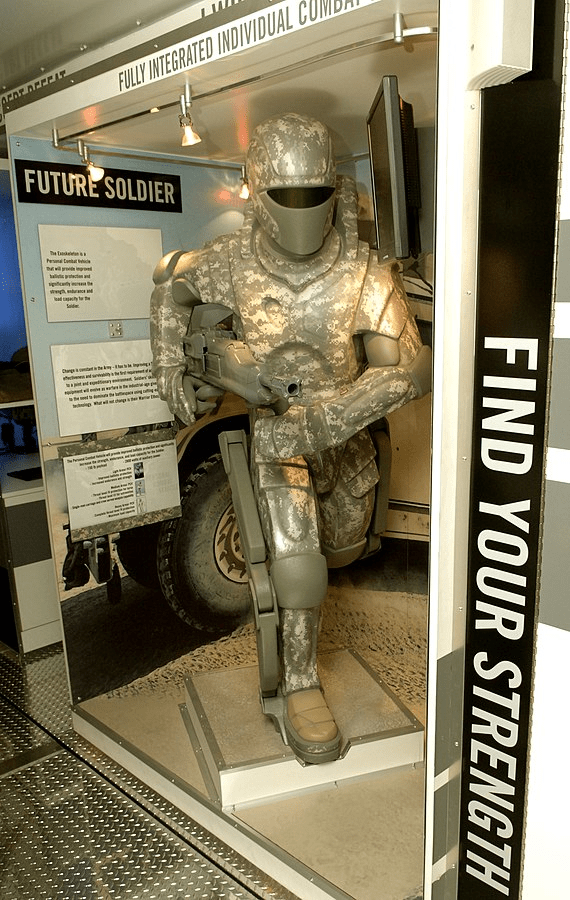
There are tons, and I mean tons, of different examples of armor and exosuits throughout fiction now. I can’t even approach listing all of them here. I probably can’t even list all of the nonfiction exosuits in existence today. None of the real life suits are made to stop bullets, which I think says a lot about our collective maturity as a species, but the technology is still there, and blossoming. Most are for medical use, some are for lifting heavy objects, and others have combat applications outside of turning the wearer into a walking tank, but so far, nobody has bothered to build true power armor yet. It’s possible that it just doesn’t really make that much sense to give someone a set of armor on a modern battlefield. If you’re getting shot at without any cover, you’ve probably already made a dire mistake. And while armor might stop some bullets, we’ve already invented munitions that can destroy actual tanks. If you’re not completely safe riding in a 50 ton vehicle covered in reactive explosive armor, you’re definitely not going to be safe in a suit of armor. You will certainly be slower and easier to hit though. Until the armor can make the person wearing it not only tougher, but faster too, I don’t think we’ll be seeing any future soldiers like the one depicted in this US Army recruitment tool:
Thank you for reading,
Benjamin Hawley
 Dangerous Day Job