There are lots of ways to write in the modern world, from browser based word processors that save every word you type, all the way to speech to text software that you can use on your daily walk. We’ve had many advancements since the days when pen and paper was your only option, but even those are relatively modern inventions.
Some written art forms like calligraphy still take advantage of ink and brush, and there are other, older forms of writing that have died out almost completely. Cuneiform, the earliest known writing system, was often written by pressing a stylus into a block of semi-hardened clay that became permanent after firing. Imagine spotting a typo after you’ve already stuck your essay into the furnace. No amount of white out can help you now.
It’s no wonder then that the stories told during those times were predominantly oral traditions, later recorded into clay, and later still, parchment, or papyrus. The earliest written stories we have date back to about 700 BC, and we know they were written in clay because we still have copies.
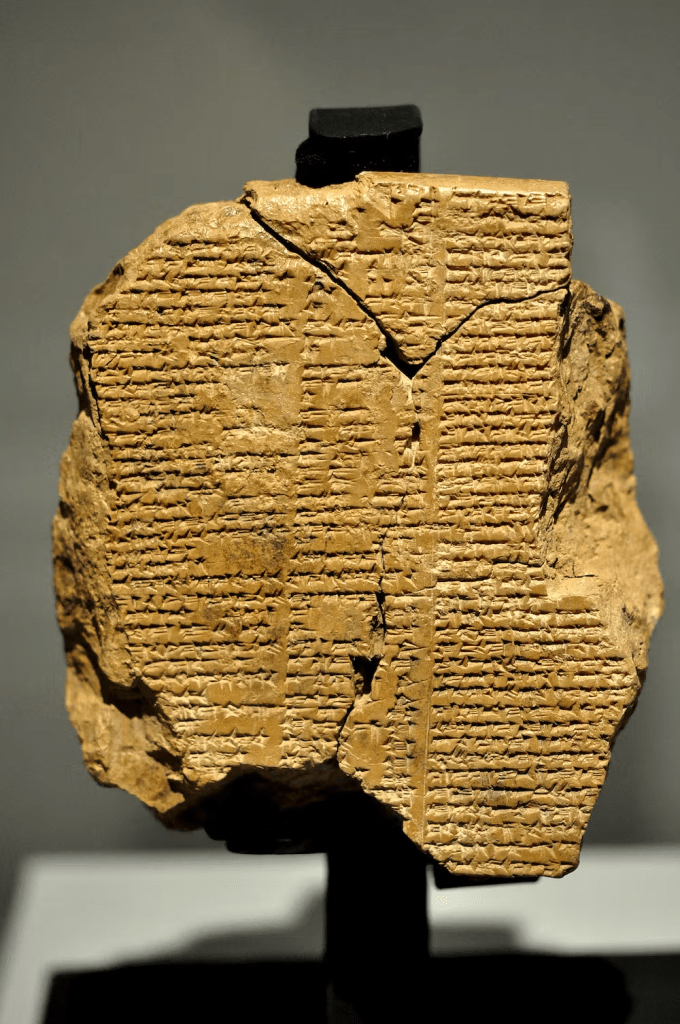
This is the 5th tablet of The Epic of Gilgamesh (photo from commons.wikimedia.org)
Counter to how it might seem looking at this big, bulky piece of clay, writing these stories down allowed them to spread far and fast, meaning stories like The Epic of Gilgamesh and The Iliad were able to survive right up into present day, where you can pick up a copy at any Barnes and Noble. I’m sure Homer would be impressed.
From fired clay, we moved on to the quill pen which became widely popularized around about 600 AD. Ink and charcoal were actually in use long before then for writing on parchment paper and papyrus, a technology that shared the stage with clay tablets dating back to around 2500 BC. Also in use throughout east Asia were bamboo and silk mediums, allowing for ink to be spread by a brush.
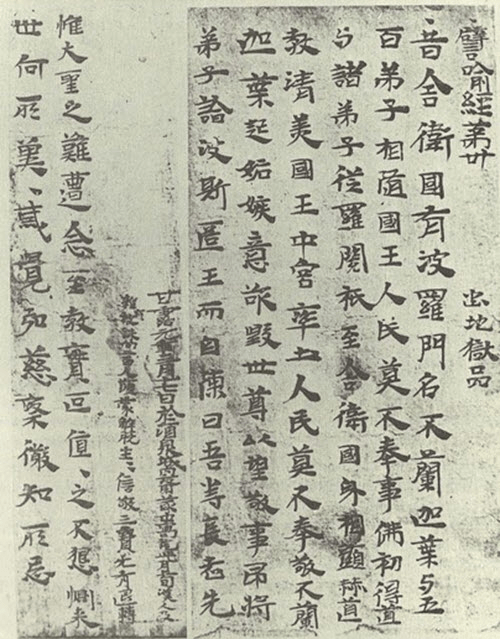
An example of silk paper with ink writing, image from silk-road.com
We used quills and inkwells all the way up into the early 1900s, when pens started to take over. According to the encyclopedia Britannica, early commercial pens came about around 1895, but there wasn’t a ‘satisfactory model’ produced until Lázló Bíró, a Hungarian living in Argentina made his ballpoint pen, commonly called the ‘biro.’ It became popular in Great Britain during the late 1930s, and by the 1940s had come into use world wide. Today, these are the most popular way to write by hand.
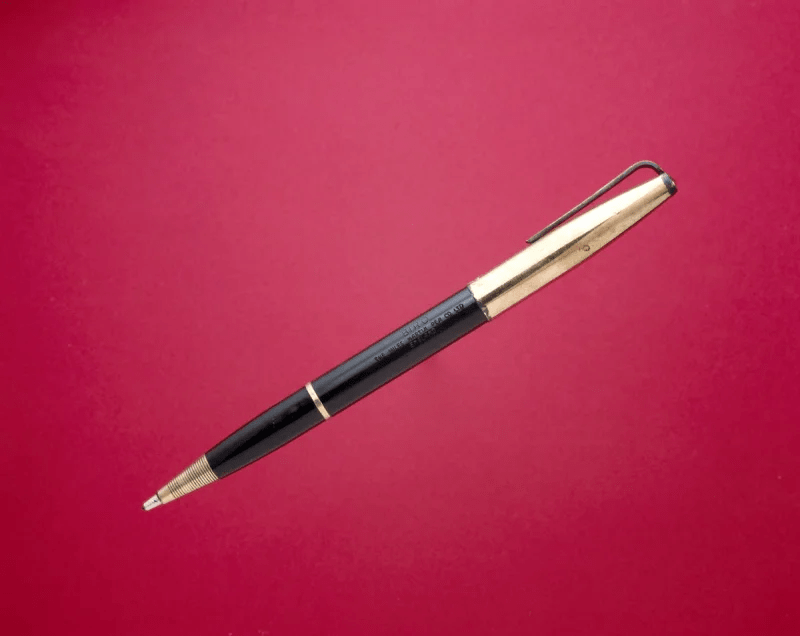
An early ballpoint or biro, from circa 1945, image from time.com
Typewriters were actually in use before the pen was, kind of like how clay tablets and papyrus share an age. The earliest commercial models were popularized in offices around the 1880s. Many elements of the typewriter made it into modern keyboards for use with digital computers, and now we’re working on making those obsolete too with speech to text language processors. Personally I don’t think I’ll ever give up a keyboard because it’s just plain faster, but maybe one day I’ll be telling some youngster about how there was once no alternative to using your fingers if you wanted to type something.

Peter Mitterhofer’s typewriter prototype from 1864, image from wikipedia.com
Writing is already very difficult, so I’m glad that I can take advantage of modern media and technology like ballpoint pens and Google Docs to make it a whole lot easier. From clay tablets all the way to typewriters, everything else seems like a huge pain. So if your elders ever tell you that they had to walk to school, uphill, both ways, in the snow, and they had to write essays by hand, just remind them that there are worse ways to write than pen and paper.
Thank you for reading,
Benjamin Hawley
 Dangerous Day Job